Not long ago, I was speaking with a leader who found herself wrestling with questions that had less to do with performance and more to do with possibility. She wasn’t questioning her capabilities. She wasn’t struggling to deliver results.
Instead, she was asking bigger questions, and didn’t know where to turn for answers.
- How do I expand the way my leader sees my potential?
- How do I gain exposure to new functional areas?
- What experiences do I need to prepare for what’s next?
- Who has successfully navigated a path similar to mine?
As our conversation continued, I realized she wasn’t simply looking for answers, she was searching for people who understood her challenges, could offer perspective, and would share lessons learned from their own journeys. She wanted to connect with leaders who had wrestled with similar decisions and emerged stronger because of them.
In short, she was looking for connection and community―and she is far from alone.
Recent research from Gallup’s State of the Global Workplace: 2026 Report suggests that many leaders may be experiencing exactly the same thing. While leaders report higher levels of engagement and overall wellbeing than individual contributors, they also experience significantly higher levels of negative emotions. Compared to individual contributors, leaders were more likely to report experiencing stress (+7 percentage points), anger (+12), sadness (+11), and loneliness (+10) on the previous day. Gallup summarized these findings with a striking observation: Leaders have higher life evaluations, but worse days, than those they lead. (Link to report below.)
The research highlights a reality that many leadership roles create―greater agency, opportunity, and influence. It can also create greater responsibility, social distance, and emotional burden. Gallup notes that leaders frequently carry the responsibility of making difficult decisions that affect many people’s lives.
For many leaders, that burden is largely invisible. They are expected to maintain composure during uncertainty. They are responsible for team performance, organizational outcomes, strategic direction, customer expectations, and increasingly, helping their organizations navigate constant disruption and change. They are often the people everyone else turns to.
But who do leaders turn to?
One of the biggest misconceptions about leadership is that experience eventually eliminates uncertainty. In reality, many accomplished leaders continue to grapple with questions about their future, their influence, their development, and the impact they want to make―the questions evolve, but they never fully disappear. The difference is that effective leaders learn they do not have to navigate those questions alone.
Three Leadership Practices to Put in Place
If the Gallup research tells us anything, it’s that leadership can feel isolating, even when things appear to be going well. The strongest leaders don’t simply endure that reality, they build intentional support systems around themselves.
1. Build a Trusted Circle of Advisors
Every leader needs peers who understand what leadership actually feels like. Identify a set of peers you trust and commit to regular check-ins, even if it’s only once a quarter. Share challenges, discuss goals, celebrate wins, and create space for honest conversation. Sometimes the most valuable thing a leader can hear is: I’ve faced that, too.
2. Find a Mentor or Executive Coach
A mentor or coach provides something many leaders rarely have enough of: objective perspective.
When the pressure builds and the stakes rise, a trusted mentor can help leaders think more clearly, challenge assumptions, and navigate important career and business decisions with greater confidence. The best leaders are not the ones who go it alone―they’re often the ones who intentionally seek counsel.
3. Invest in Community
Leadership was never meant to be a solo journey. Professional communities create opportunities to learn from others, share experiences, and build meaningful relationships that extend beyond a single organization.
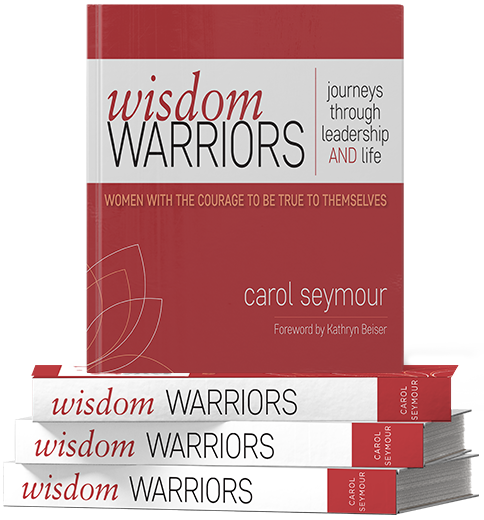
At Signature Leaders, this belief is one of the reasons we created the . The purpose is simple: to foster genuine peer connection and community for leaders at every stage of their careers. When leaders come together to share experiences, challenge one another’s thinking, and support each other’s growth and learning, they discover that many of the challenges they thought were uniquely theirs are actually shared.
Leadership may occasionally feel lonely, but if you’re questioning your next move, carrying the weight of responsibility, or wondering whether others face similar challenges, remember this:
You are in good company. Many exceptional leaders are asking the same questions, carrying similar pressures, and searching for the same connections.
One of the most influential leaders I have learned from often shared this simple piece of advice:
Never worry alone.
It’s a reminder worth carrying. The challenges of leadership may be real, but they do not have to be faced in isolation.
The path becomes easier when we stop trying to walk it alone.
Source: https://www.gallup.com/workplace/349484/state-of-the-global-workplace.aspx
About the Author
Jennifer Krentel: Vice President, Business Development, Signature Leaders
 Jennifer partners with CEOs, executive teams, and boards to create clarity around vision, strategy, and culture across global commercial, government, and nonprofit sectors. At Signature Leaders, she drives business development and cultivates long-term executive relationships, often supporting leaders as they step into new roles.
Jennifer began her career in organization development, focusing on culture transformation and strategic planning. She is a skilled facilitator in executive workshops on mission, vision, and values, and discovered a strength in building client partnerships and shaping consulting engagements. As a founding member of a Washington, D.C. based boutique firm, she helped scale the organization from start-up through growth to ultimately be acquired by TiER1 Performance. With Signature Leaders joining TiER1 in early 2026, she plays a central role in advancing integration, building strong cross-company relationships, and driving shared growth across the organizations.
She holds a master’s degree in Organization Development from American University and a bachelor’s degree from the University of Kansas, along with certifications in culture transformation and change management.
Jennifer lives outside Los Angeles with her husband and two children. She enjoys gardening, homesteading, and is especially passionate about helping women leaders enter and thrive in the C-suite.